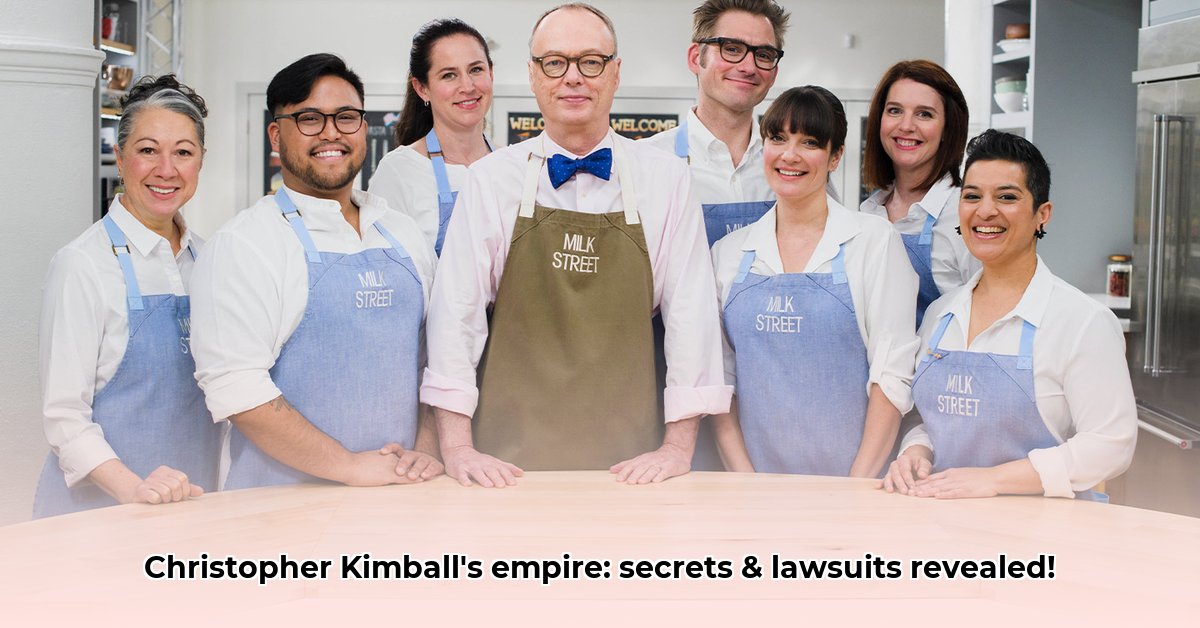
Christopher Kimball's journey from the meticulously tested recipes of Cook's Illustrated to the bustling kitchens of Milk Street is a compelling blend of culinary success and high-stakes legal battles. This narrative explores his impressive career, the controversies that shaped his path, and the resulting impact on his estimated net worth, a figure reported to range from $20 million to $25 million—a range reflecting the difficulty of quantifying success interwoven with significant legal disputes.
From Cookbooks to Courtrooms: A Culinary Powerhouse's Ascent
Kimball's early career was marked by undeniable success. His dedication to accurate recipes and rigorous testing transformed Cook's Magazine and later America's Test Kitchen into culinary powerhouses. His name became synonymous with reliable recipes and a straightforward approach to cooking, translating into significant financial gain and establishing a foundation for his substantial net worth. However, this ascent took a dramatic turn with his departure from America's Test Kitchen and the subsequent founding of Milk Street. This move ignited a legal battle, with America's Test Kitchen alleging misappropriation of company resources and the poaching of key employees. While the settlement's details remain confidential, the legal conflict undoubtedly influenced Kimball's financial standing, adding a layer of complexity to any assessment of his net worth. Did the legal costs significantly impact his bottom line? Only an understanding of the settlement could fully answer that question.
Milk Street's Spicy Launch: The Price of Independence
Milk Street's swift rise to prominence is intrinsically linked to the controversy surrounding its creation. Accusations of misappropriation focused on the ambiguous boundaries between Kimball's personal brand and America's Test Kitchen's intellectual property. Did he leverage his former employer's resources unfairly? The confidential nature of the settlement prevents a definitive answer, fueling speculation and diverse interpretations of his business practices. This ambiguity further complicates the attempt to precisely determine Christopher Kimball's net worth. The unanswered questions surrounding the legal battle directly impact any financial evaluation.
The Murky Waters of Intellectual Property in the Food World
Kimball's experience highlights a common challenge in creative industries: defining the line between personal brand and company assets. When a key creative figure leaves a company, taking their expertise and potentially ideas or methods, it often sparks legal conflict. His case acts as a cautionary tale, prompting questions about fair competition and intellectual property protection. How much of a company's success is attributable to an individual's talent versus the overall corporate structure? This inherent ambiguity complicates the task of accurately evaluating Christopher Kimball’s net worth. What percentage of Milk Street's success can be directly attributed to Kimball's individual efforts versus the team and infrastructure he built?
Broader Impacts: A Ripple Effect Across Stakeholders
The Kimball-related lawsuits produced far-reaching consequences for numerous stakeholders. Consider the impact on:
- Aspiring Food Entrepreneurs: The legal battles heightened awareness of intellectual property protection and emphasized the importance of stronger contract negotiation.
- Established Food Companies: The case spurred stricter IP protection strategies and tighter employee contracts, leading to enhanced talent retention programs and increased investments in IP security.
- Food Media Investors: The events promoted more rigorous due diligence processes regarding intellectual property ownership and a more cautious investment approach.
- Intellectual Property Lawyers: There was a surge in demand for specialists in food media IP law, leading to growth and further specialization within the field.
A Legacy Defined by Success and Controversy
Christopher Kimball's net worth is more than a simple numerical figure; it represents a narrative of drive, innovation, and the intersection of entrepreneurial ambition with legal complexities. His entrepreneurial spirit undeniably left its mark on the culinary world, with his ventures reaching millions. However, his lasting legacy is equally defined by the legal disputes that raise crucial questions about business ethics and fair competition. This blend of achievement and controversy makes his story a compelling case study, underscoring the challenges and rewards of balancing creative passion with the realities of building and protecting a business. While the precise value of his net worth remains unclear, his significant impact on the culinary landscape is undeniable. His journey serves as a cautionary tale and inspirational story for future generations of entrepreneurs.
Avoiding Legal Disputes When Launching a Food Media Company
Transitioning from employment to independent entrepreneurship in the food media sector requires careful planning and strategic legal navigation. Here are key steps to mitigate potential disputes:
Protect Intellectual Property: Conduct thorough due diligence to differentiate your new venture's intellectual property from that of your former employer; secure relevant copyrights and trademarks. This action reduces future disputes.
Contractual Clarity: Employ clear, well-defined contracts with suppliers, vendors, and investors, leaving no room for misinterpretations. Detailed contracts are the foundation of a successful and legally sound business.
Regulatory Compliance: Adhere meticulously to all relevant health, safety, and advertising regulations. This is not only a legal necessity, but it also protects and enhances your brand's reputation.
Navigating Former Employer Relations: Develop a distinct brand identity, focus on unique strengths, and strictly adhere to all previously signed agreements, including non-compete clauses. It is crucial to seek legal counsel as a guide.